
In SEC crypto news, we’re taking a look at May 19, 2025, when Coinbase became the first crypto-native company ever admitted to the S&P 500, the same index that tracks trillions of dollars in passive investment and sits inside millions of American retirement accounts. COIN stock had already surged roughly 24% on the day of the announcement, and by June 2025, it was the top-performing constituent in the index.
That milestone arrived almost exactly two years after the SEC sued Coinbase in one of the most consequential enforcement actions in crypto history, a case the agency ultimately dropped with zero penalties, zero required changes to Coinbase’s business, and an estimated $50M per year in freed-up legal costs for the company.
Here is the central tension this article unpacks: Coinbase was sued in a case the SEC said could prove the entire exchange was operating illegally, yet three years later, the company paid nothing, changed nothing, and landed inside America’s most prestigious stock index. So what actually happened between June 2023 and May 2025, and what does it mean for crypto regulation going forward?
COINBASE-BACKED CRYPTO GROUP URGES SENATE TO PASS THE CLARITY ACT
Stand With Crypto, an advocacy group launched by Coinbase, says more than 200 organizations have sent a letter to US Senate urging lawmakers to bring the CLARITY Act to the floor without delay. pic.twitter.com/y8NcxJE2HN
— Coin Bureau (@coinbureau) June 8, 2026
Coinbase SEC Crypto Lawsuit Explained: What the Case Actually Alleged
The SEC’s lawsuit against Coinbase, filed on June 6, 2023, likens the situation to a city inspector finding a restaurant operating without a license and serving potentially illegal food. The SEC accused Coinbase of acting as an unregistered national securities exchange, broker, and clearing agency, along with offering unregistered securities through its staking-as-a-service product.
The agency’s core argument is that several tokens listed on Coinbase, including SOL, ADA, and MATIC, are securities under U.S. law based on the Howey Test, which requires an investment in a common enterprise with an expectation of profit.
If the SEC’s view prevails, Coinbase’s business model could be fundamentally altered. Following a prior Wells notice indicating enforcement action, COIN shares fell approximately 12% on the day the lawsuit was filed.
CEO Brian Armstrong and Chief Legal Officer Paul Grewal responded, asserting that crypto tokens do not fit the Howey definition and criticizing the SEC’s enforcement approach. The implications of this case extend far beyond Coinbase.
The Three-Year Fight: How Coinbase Took On the SEC and Didn’t Blink
Big month @Coinbase:
– First company bringing global crypto perps + options to the US in a compliant way
– Official USDC treasury deployer for @HyperliquidX
– Gold & silver perps now live outside the US (coming to the US soon)
– Partnered with Standard Chartered to expand global… https://t.co/5aZAv4iLfA— Brian Armstrong (@brian_armstrong) June 3, 2026
The legal battle unfolded in distinct phases, each one shifting the odds in ways that weren’t obvious in real time.
June 2023 – The lawsuit lands. The SEC files in the Southern District of New York. Coinbase announces it will fight rather than settle, a strategic choice that separated it from several other crypto companies that reached agreements with regulators during the same period.
March 2024 – A court ruling cuts both ways. On March 27, 2024, Judge Katherine Polk Failla largely sided with the SEC at the pleadings stage, ruling that the agency had adequately alleged that multiple tokens on Coinbase and its staking program involved securities transactions. The judge dismissed only the SEC’s narrower claim related to Coinbase Wallet. The ruling kept the case very much alive and left a significant cloud of legal uncertainty over Coinbase heading into an election year.
January 2025 – The tide begins to turn. Two developments arrived in quick succession. The Third Circuit Court of Appeals ruled that the SEC’s rejection of Coinbase’s 2022 petition for crypto-specific rulemaking was “conclusory and insufficiently reasoned” – effectively telling the agency it couldn’t just say no without a real explanation. Separately, the SEC quietly reassigned the senior trial attorney leading its crypto enforcement cases, including the Coinbase matter, to an internal IT-related role – a move widely read by legal practitioners as a signal that the agency’s aggressive enforcement posture was being wound down.
February 27, 2025 – Dismissal with prejudice. Under new SEC leadership and a clear policy pivot away from enforcement-first crypto regulation, the agency filed a joint stipulation to dismiss the case in SDNY. The SEC’s own filing stated the dismissal was “not based on any assessment of the merits of the claims” – an explicit acknowledgment that this was a policy decision, not a courtroom defeat. No penalties. No required operational changes. The case was over. Coinbase estimated it would save more than $50 million annually in legal costs. The broader shift in crypto regulation toward legislative frameworks like the CLARITY Act had helped reshape the environment in which the SEC was operating.
DISCOVER: Best Meme Coin ICOs to Invest in 2026
S&P 500 and Zero Penalties: What Coinbase’s Win Actually Signals for Crypto Regulation
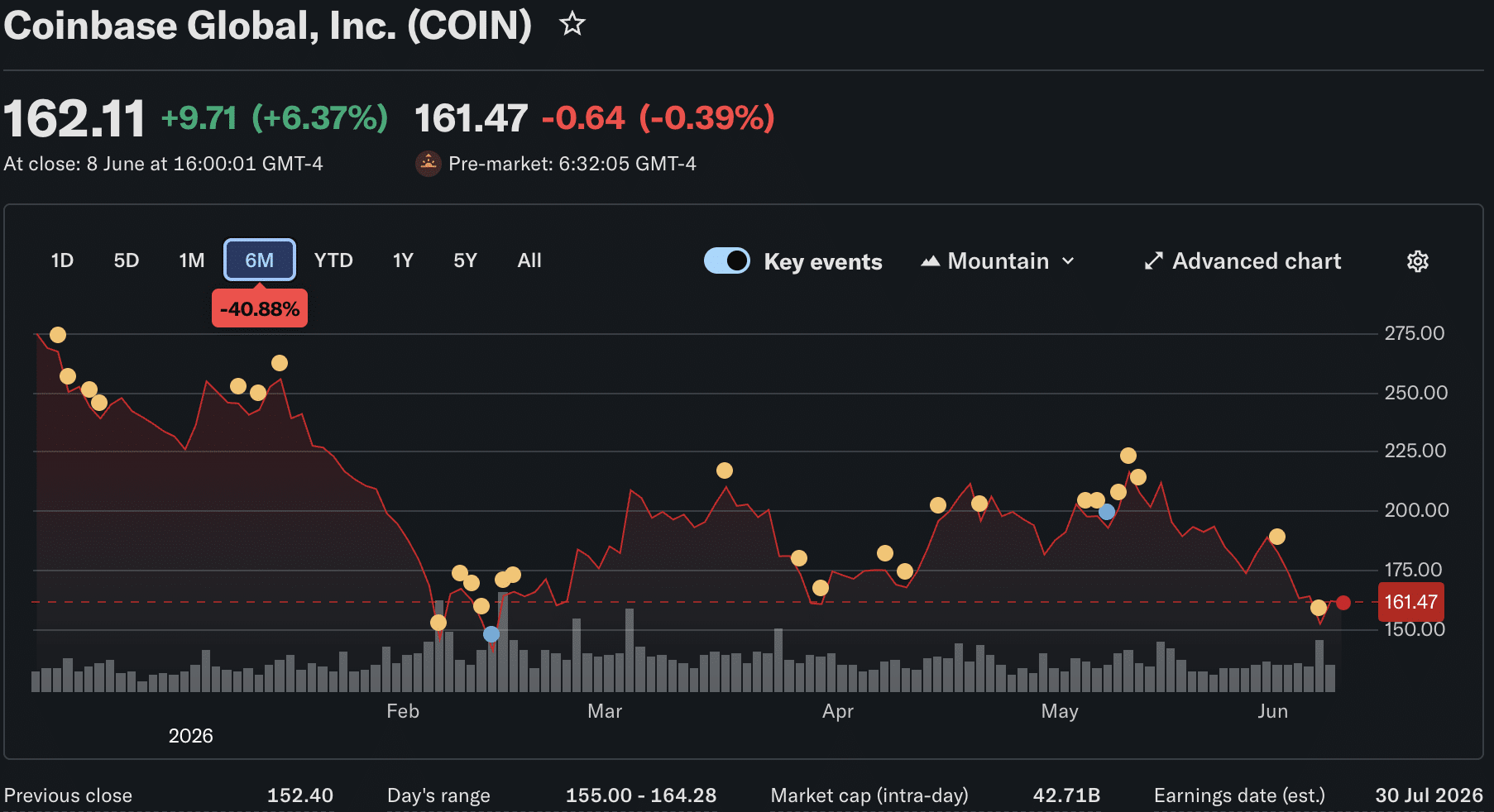
The surface reading of Coinbase’s story suggests that it got lucky with a change in administration that saved it from a potentially losing case against the SEC. However, Coinbase fought the case for nearly two years, making significant progress in the Third Circuit and building a legal record that challenged the SEC’s enforcement approach.
Manatt noted that the collapse of the Coinbase SEC lawsuit and a stay in a related case against Binance signify a shift from adversarial litigation to cooperative policymaking in digital asset regulation. The SEC’s strategy of using the Howey test against exchanges has been sidelined for now.
Coinbase’s inclusion in the S&P 500 on May 19, 2025, marked a significant milestone, granting millions of Americans indirect exposure to crypto through their retirement accounts. CEO Brian Armstrong viewed this as evidence of mainstream acceptance of digital assets.
However, challenges remain, including an ongoing SEC investigation described as a legacy probe and a private lawsuit focused on regulatory misrepresentation. While the SEC’s new Crypto Task Force is moving toward rulemaking, a comprehensive regulatory framework remains lacking. Coinbase is strategically expanding into new markets, leveraging the legal developments to grow its presence.
EXPLORE: Best Crypto Presales With Asymmetric Upside in the Current Market
The post From SEC Crypto Lawsuit to S&P 500: How Coinbase Won Its Three-Year Regulatory War appeared first on 99Bitcoins.
