
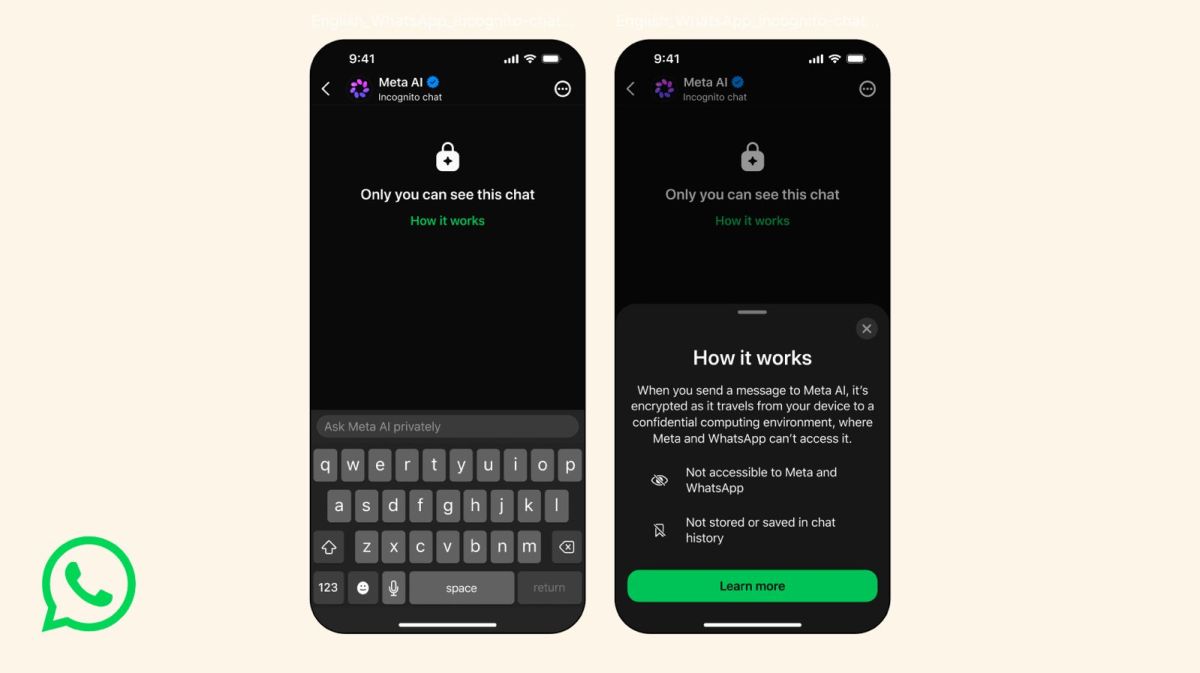
Meta on Wednesday said it is adding the ability to start “incognito” conversations with its Meta AI chatbot within WhatsApp. These conversations, the company said, will be processed in a secure environment and can’t be seen by anyone.
Users can start an incognito session by tapping on a new icon in one-on-one chats with Meta AI. The company said the feature will also be available on the standalone Meta AI app as well.
Incognito chats will roll out to WhatsApp and the Meta AI app over the next few months.
Meta said these incognito conversations are not saved, and messages will disappear by default once you close the chat. The session will also end if you close the app or lock your phone, and Meta AI will lose the context of that particular conversation, the company said.
“People are starting to use AI for everything, including some of their most private thoughts, whether that’s tackling financial or health questions, or for advice on how to respond to a tricky message from a friend or a colleague. We think it’s really important to give people the ability to ask these questions as privately as possible,” Alice Newton-Rex, VP of Product at WhatsApp, told TechCrunch over a call.
The company has been laying down the groundwork for secure AI chats on WhatsApp for a while now. Last year, it detailed its private processing infrastructure that would let it build AI features without breaking end-to-end encryption. Since then, WhatsApp has added features like AI-powered summaries of messages that use this architecture.
Newton-Rex said Meta used smaller models to power its previous features, but the new incognito chat uses its latest Muse Spark model, which was released last month.
The company is already working on its next feature that taps its private processing infra. Called Side Chat, it will let users invoke Meta AI within chats to ask questions and get answers privately without notifying or showing it to other people in the chat.
Currently, you need to tag a message and ask a question to the AI assistant to get an answer that other participants in the chat can see. If you privately need to ask a question, you have to paste the text in a separate chat window.
ChatGPT and Claude offer incognito modes, too, and companies like DuckDuckGo and Proton have launched their own privacy-first chatbots.
Meta’s move towards private AI chats comes at a key time. Last month, Reuters cited lawyers who opined that users’ conversations with an AI chatbot could be used against them in litigation.
When you purchase through links in our articles, we may earn a small commission. This doesn’t affect our editorial independence.
